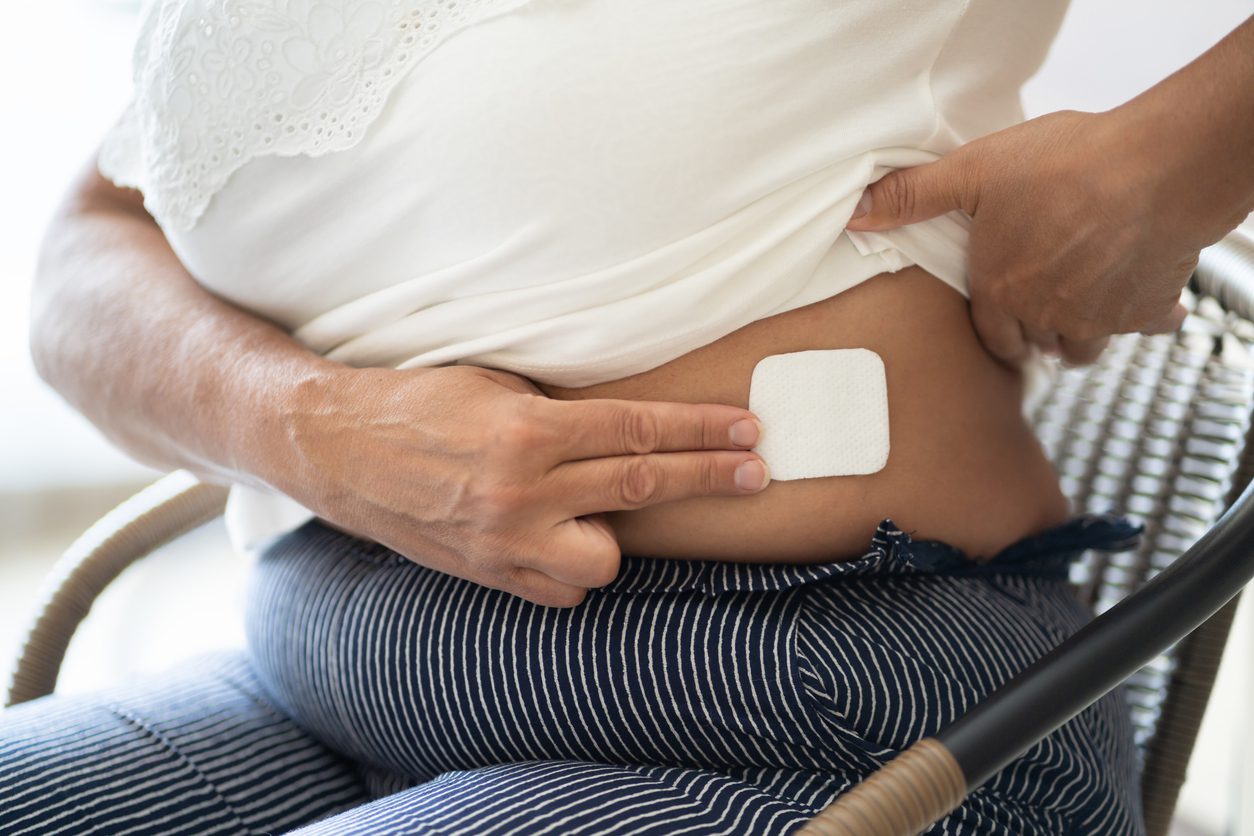
What To Do If Your Estrogen Patch Is Unavailable: FAQs About the Shortage
May 11, 2026
Rising demand and supply chain issues have made transdermal estrogen—one of the most popular types of menopause hormone therapy—more difficult to find. Below, we’re answering frequently asked questions about the shortage, including workarounds if you’re having trouble getting your hands on a prescription.
Why is there an estrogen patch shortage?
Menopause hormone therapy (MHT) has surged in popularity in recent years as research has emerged and healthcare providers have become more comfortable prescribing it. The removal of the FDA black box warning from estrogen products last year has also played a role. Unfortunately, manufacturers haven’t been able to keep up with increased demand, resulting in backorders across the country.
What medications are impacted by the estrogen shortage?
The twice-weekly estrogen patch, which is prescribed for hot flashes/night sweats and bone protection, was the first impacted by shortages. It’s often preferred by providers because it tends to stick better and is less noticeable than the once-weekly patch. For some women, the twice-weekly dosing feels more stable.
For patients having trouble accessing the twice-weekly patch, the once-weekly is usually the next best alternative and is as effective in managing symptoms. The latter is also in short supply in some locations, but it’s not yet as impacted by the drug shortage. So, if you’re having trouble getting the twice-weekly patch, it’s worth seeing if your pharmacy has the once-weekly in stock.
What should I do if my patch is unavailable?
If your estrogen patch is on backorder at your usual pharmacy, don’t panic. While navigating the shortage is a headache, there are workarounds…
1. Check out alternative pharmacies (more on this below)
2. Ask about once-weekly patches
3. Ask your pharmacist about equivalent formulations and generics
4. Create a back-up plan with your clinician
Who has estradiol patches in stock?
Local pharmacies
Unlike large pharmacy chains like CVS, local pharmacies sometimes have more flexibility to purchase from different distributors, and they often have smaller patient populations, which means fewer people competing for the same drugs.
Mail-order pharmacies
In-network mail-order pharmacies like ExpressScripts or Optum Rx are also good options since they tend to have big fulfillment centers with larger stock. Insurance may dictate which to use; check the back of your insurance card to see which is covered by your plan. If those don’t work, you can also try cash-pay online pharmacies like CostPlus and HRT Club.

Are there alternatives to the estradiol patch?
Women’s health providers sometimes prefer the transdermal patch due to its lower risk of blood clots. (This form of estrogen therapy is unique in that it doesn’t pass through the liver, which is where risk of blood clotting can come into play with estrogen.) However, if you’re having trouble finding it, there are other viable options:
Estrogen gel
This form of estrogen therapy is applied topically once per day, and it’s absorbed through the skin into the bloodstream. It is just as safe and effective as the patch.
Estrogen spray
The estrogen spray works similarly to the gel, but there aren’t generic options available, so it can be a bit pricier, depending on insurance coverage.
Oral estrogen
The estrogen pill is taken once a day and offers flexibility when it comes to dosage. There are also many generic versions available, making it a more affordable option. Oral estrogen can cause a slight increase in risk of blood clots compared to the patch, which is why it’s not always the first medication prescribers reach for, but it’s still considered a safe and effective option for most people.
Combined patch (estrogen and progestogen)
For women with a uterus, protecting against endometrial cancer is important while using estrogen. The combined patch can serve that purpose.
Every hormone therapy option comes with its own risk/benefit profile, which is why these decisions should include a thoughtful conversation about your health history, symptoms, and preferences. If you’re feeling overwhelmed navigating shortages or figuring out what alternatives make sense for you, our clinicians can help guide you through your options.
How long does it take to adjust to gel or other estrogen formulations?
It can take up to three months to adjust to a new hormone dose, but it can be much quicker if you’re switching from the patch to an equally dosed alternative. (For example, if someone is switching from a 0.05mg patch dose, that’s roughly equivalent to two pumps of estradiol gel.) Prescribers usually try to transition to an approximately equal amount of estrogen when switching formulations.
What happens if I suddenly stop my estrogen patch?
For some people, a brief pause in taking transdermal estrogen (up to around a week) won’t cause a noticeable difference. Others may notice changes right away such as worsening hot flashes. Some perimenopausal women also experience breakthrough bleeding as a normal side effect to a change in hormone routine.
Can I cut my estrogen patch in half?
Patients who have trouble finding their estradiol patch dose often ask whether taking a larger dose and cutting it in half is an option. At the moment, all doses are impacted by the shortage, so it’s not the most reliable backup plan. That said, if you’re in a real pinch and your pharmacy happens to have a better supply of higher doses, you can cut a patch in half.
It’s important to note this only works for matrix patches, not reservoir patches. Matrix patches release an adhesive containing estrogen, which is distributed evenly throughout the patch and released gradually. Reservoir patches contain estrogen in a gel at the center and can’t be cut in half because the medication will leak out. (If you’re not sure which kind of patch you have, you can ask your pharmacist.)
To cut your matrix patch in half, cut down the middle if it’s a circle, and cut diagonally if it’s a square. You can replace the remaining half back in its package and store it in the refrigerator for up to a week. We don’t have data to show how this method impacts effectiveness—which is why your pharmacist may advise against it—so it’s not a long-term solution.
Is progesterone also in short supply?
Although the shortage has mostly impacted estrogen patches, there are signs that it’s also starting to affect oral micronized progesterone, which is an important part of many MHT regimens since it provides uterine protection. Alternatives to consider here, in addition to the combined patch discussed above, include:
Progestin-only IUD
The progestin-only IUD is a device that’s inserted into the uterus and delivers progestin locally. Like oral progesterone, it protects the uterus from endometrial growth.
Duavee (oral estrogen and bazedoxifene)
Duavee is a daily pill combining oral estrogen with bazedoxifene, which, similar to progesterone, protects the uterine lining from thickening. As an added benefit, bazedoxifene reduces the risk of osteoporosis and may also help to reduce the risk of breast cancer.
What about medications I can purchase directly online?
If you’ve seen advertisements for direct-for-purchase medications available online, they’re likely from compounding pharmacies. These companies copy medications that have been approved by the Food and Drug Administration (FDA) and release them to the public without FDA approval.
Compounded medications aren’t inherently bad, but dosing and ingredients can be inconsistent. Importantly, because they aren’t regulated by the FDA, they’re not always following strict testing standards and safety isn’t guaranteed.
If you’re having trouble getting your prescription filled, it may be tempting to purchase from companies that promise to help you get hard-to-find medication more quickly, but before you do that, we recommend looking into the options outlined above.
Meet with an Elektra clinician for guidance on navigating disrupted menopause care safely >>
READ MORE: