Birth Control and Your Hormones: Separating Fact from Fiction
May 15, 2026
The birth control pill has been around for decades and has been very well-studied. Despite this, there’s still a *lot* of confusion around its safety and long-term health risks, as well as what it’s effective at treating. (Spoiler: it’s not just a contraceptive—it’s actually a solid treatment option for many hormonal symptoms, including symptoms of perimenopause).
We sat down with Elektra Health Chief Medical Officer Dr. Nora Lansen, a family physician and menopause specialist, for a Q&A to get to the bottom of this sticky topic and better understand the role of hormonal birth control in managing women’s health conditions.
Does birth control negatively impact our hormones?
This is one of the main myths I see on social media that’s really behind a lot of the panic, this idea that hormonal contraceptives are bad because they impact future fertility. There just is not research to support this. In fact, the research we do have shows that we return to our baseline levels of fertility within a few months of stopping the pill.
It’s worth noting that most of us don’t even know what those baseline fertility levels are until we are trying to conceive. If we’ve been on birth control for a few years and then happen to have trouble conceiving, there’s zero research to suggest birth control was the cause—we just usually have no insight into our fertility levels until trying to get pregnant.
Are there negative consequences to suppressing your body’s “natural” cycles?
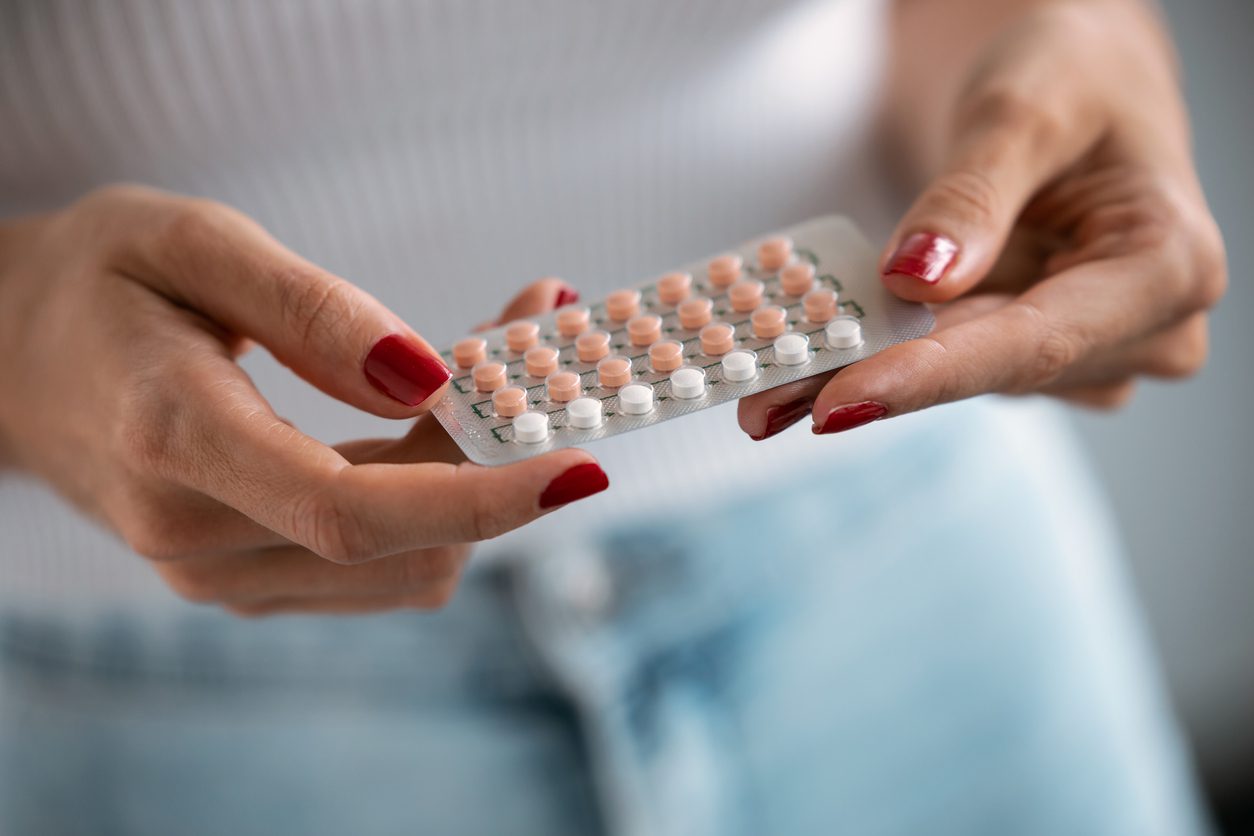
If you have a condition like PCOS, endometriosis, or PMDD, or if you’re struggling with perimenopause, symptoms are usually worse at different times of the menstrual cycle, especially right before a period. Now, if you take oral contraceptives, those symptoms can break through during the sugar pill week. For that reason, we recommend women with these types of hormonal concerns skip the sugar pill week and start right away on your next pack.
This is sometimes where I hear the question, “if I’m not getting my period, is that unnatural?” What many people don’t realize is that bleeding during the sugar pill week is not a real period; it’s actually a “withdrawal bleed” due to hormone level changes when you stop taking the actual pill.
The reason birth control packs even include that placebo week is because when it was first brought to market in the 60s, manufacturers thought it would feel more “natural” for patients and prescribers if women still bled monthly. In other words, there’s generally no actual medical reason we need to take the sugar pill week.
Birth control is prescribed for a range of conditions. Are women who are recommended birth control for menopause symptoms being short-changed?
If someone’s feeling dismissed, they haven’t been given the information they need in order to feel validated and to really understand what’s happening with their body. If we’re prescribing the pill for PCOS or perimenopause, we need to explain why we’re doing that and why that’s the best option for symptom relief, which it often is!
The pill is a fantastic treatment for a variety of conditions and symptoms, but because it is marketed for and perceived as a pregnancy prevention intervention only, it’s understandable that patients would ask why they’re being prescribed something for pregnancy prevention. It’s important for women’s health providers not just to write the prescription but to explain why they’re doing it.
What menopause symptoms can birth control help with?
There are a few different types of birth control pills, but two primary differences: progestogen-only vs. estrogen plus progestogen. Both types of pill can help with irregular periods, which are common in perimenopausal women, but the combined pill (estrogen & progestogen) can also treat many of the other symptoms associated with perimenopause , such as hot flashes and night sweats.
Is hormone therapy or the pill better for perimenopause symptoms?
There are a few different factors to keep in mind when considering the pill vs. MHT. If you’re in your early 40s and you’re still ovulating, then there is, of course, the advantage of having pregnancy prevention on board—but it’s not the only reason you might consider it.
MHT involves a lower dose of estrogen than birth control, and sometimes that’s sufficient to treat symptoms of menopause. However, when we’re experiencing wild hormonal fluctuations in perimenopause, it’s not always a sufficient dose of hormones to stabilize those peaks and valleys, so symptoms can break through. That’s where the pill can be helpful. When we prescribe MHT and someone doesn’t experience benefits from it, it’s often because of this hormonal discrepancy, and in many of these cases, women see more success after switching to the pill.
For women who are postmenopausal (i.e., haven’t had a period for 12+ consecutive months), the pill isn’t an appropriate option anymore since it contains a higher dose of estrogen than someone would need at that stage.
Is hormone therapy or the pill safer during menopause?
With all medication, risk is very situational and dependent on both individual risk factors and medical history.
That said, one of the benefits of modern MHT prescribing is that we have transdermal estrogen products like the patch, gel, spray, and ring. These medications are absorbed through the skin and don’t pass through the liver, which is where risk of blood clotting can come into play with estrogen. Because they bypass this process, transdermal MHT products pose close to zero clotting risk.
Some of the fear around birth control stems from a marginal risk of blood clots, but again, this is highly dependent on specific risk factors like smoking, obesity, and history of heart attack or clotting disorder.
Does birth control cause cancer?
Birth control critics also sometimes cite an increased risk of breast cancer as a reason to avoid taking the pill. Breast cancer risk is slightly higher in women taking birth control than those who have never taken it, but it’s still low. (The actual risk translates to 13 additional cases per 100,000 women taking birth control each year, and for women under 35, the risk is even lower at one additional case per 50,000 women.)
What’s often left out of scary headlines about birth control and breast cancer is that this risk decreases once women stop taking the pill, which is typically years before we’re most likely to be diagnosed with breast cancer. Conversely, the birth control pill may reduce risk of ovarian, colorectal, and endometrial cancers, and that protection lasts for years after you stop taking it.
As women who have struggled with menopause symptoms know well, not treating disruptive symptoms is itself a risk worth considering. For instance, failing to get adequate sleep due to severe, treatable hot flashes can impact our quality of life and other areas of our health. It’s important that healthcare providers facilitate an open conversation around personal risk and benefit—taking into account health history and symptom severity—when evaluating potential treatment options with patients.
READ MORE: